I’ve perfected a Refrigerator Pickles method using sliced cucumbers, a simple homemade brine and classic pickling spice, and I’m sharing the one surprising trick that makes the jars turn out perfectly every time.
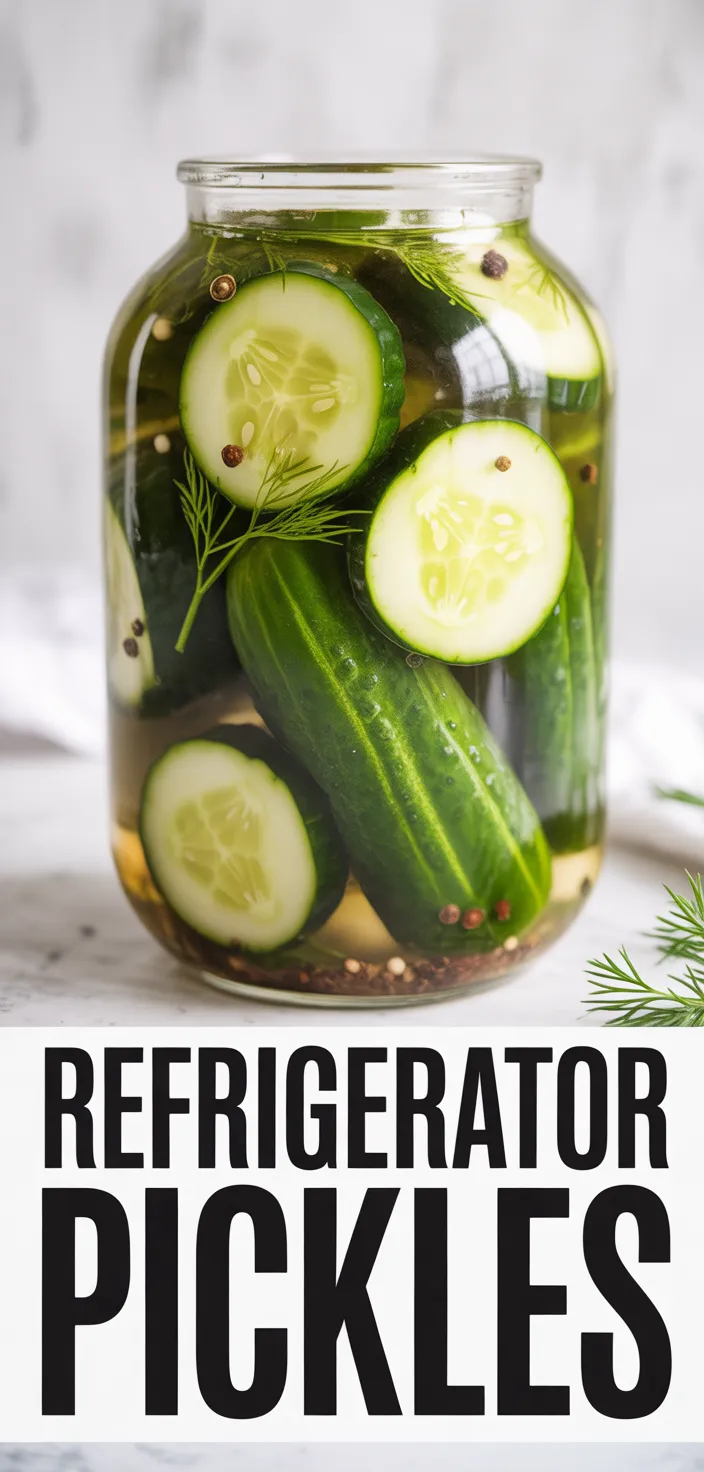
I can’t stop fiddling with my Refrigerator Pickles. I grabbed a pile of pickling cucumbers and a few fresh dill sprigs, tossed them into jars and waited, and the result surprised me.
This Dill Pickle Recipe isn’t the faded supermarket kind, it’s loud, crunchy and oddly addictive. There’s a trick to getting that perfect snap, and no, it’s not what you’d expect.
Sometimes I mess it up, sometimes it’s perfect, but every batch teaches me something new. If you like bold tang and tiny kitchen experiments, you should try this.
Trust me, you’ll get curious fast.
Ingredients
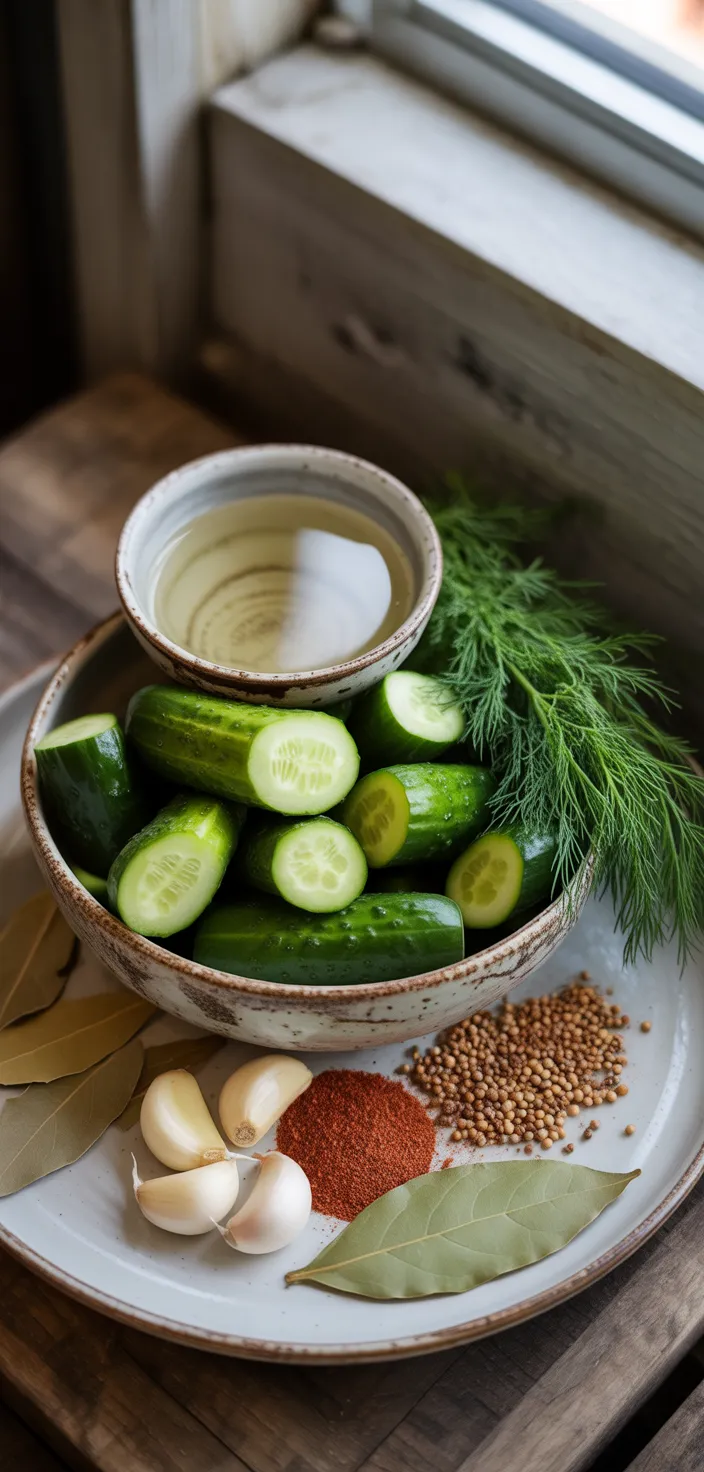
- Cucumbers: crisp, low calorie, mostly water, some fiber and vitamin K, refreshing
- White vinegar: sharp sour tang, zero calories, preserves, may help digestion and flavor
- Garlic: pungent, adds savory heat, small protein, antioxidants, potential immune boost
- Dill: bright herbal aroma, almost no calories, fresh taste, complements sour brine
- Mustard, coriander, pepper: seeds add spicy floral notes, tiny carbs, antioxidants, depth
- Kosher salt: draws moisture, firms cucumbers, essential for taste, no calories
- Red pepper flakes: optional heat, tiny calories, wake up flavor, a little kick
- Bay leaves: subtle earthy aroma, adds background complexity, no calories, used sparingly
Ingredient Quantities
- 2 pounds pickling cucumbers, scrubbed and sliced about 1/4 to 1/2 inch thick
- 2 cups white vinegar (5% acidity)
- 2 cups water
- 2 tablespoons kosher salt or pickling salt (not table salt)
- 1 tablespoon granulated sugar (optional)
- 4 cloves garlic, smashed
- 4 to 6 fresh dill sprigs, plus extra dill heads if you can get them
- 1 teaspoon dill seed (optional but nice)
- 1 teaspoon mustard seeds
- 1 teaspoon coriander seeds
- 1 teaspoon whole black peppercorns
- 1/2 teaspoon red pepper flakes (optional for heat)
- 2 bay leaves (optional)
- 2 grape leaves or a small piece of oak or horseradish leaf for extra crispness (optional)
How to Make this
1. Wash the cucumbers, then slice them about 1/4 to 1/2 inch thick and if you want extra crispness soak the slices in ice water for 20 to 30 minutes; drain well.
2. Wash jars and lids well and warm them with hot water, then put into each jar 1 smashed garlic clove for every jar size, one to two fresh dill sprigs plus a dill head if you have it, and if using tuck in a grape leaf or small piece of oak or horseradish leaf for crunch.
3. Pack the cucumber slices tightly into the jars leaving about 1/2 inch headspace; add the remaining smashed garlic, the rest of the dill sprigs, and scatter spices evenly between jars using 1 teaspoon dill seed if using, 1 teaspoon mustard seeds, 1 teaspoon coriander seeds, and 1 teaspoon whole black peppercorns total; sprinkle 1/2 teaspoon red pepper flakes and add a bay leaf to jars you want a little heat or extra flavor.
4. In a saucepan combine 2 cups white vinegar at 5 percent acidity, 2 cups water, 2 tablespoons kosher salt or pickling salt (not table salt), and 1 tablespoon granulated sugar if you want a touch of sweetness; bring to a boil and stir until the salt and sugar are fully dissolved.
5. If you like a brighter toasted spice flavor quickly toast the mustard and coriander seeds in a dry skillet for 30 to 60 seconds until fragrant then add them to the jars or the brine.
6. Pour the hot brine over the packed cucumbers so they are fully covered, keeping that 1/2 inch headspace; tap the jar or run a non metal utensil down the sides to release air bubbles, then wipe rims clean and screw on lids snugly.
7. Let jars cool on the counter to room temperature, then transfer straight to the refrigerator; dont put them back on the stove for canning, these are fridge pickles only.
8. Wait at least 24 hours before tasting, they get much better after 48 hours; store in the fridge and use within about 6 to 8 weeks for best crunch and flavor.
9. Quick tips: always use 5 percent vinegar for safe acidity, measure the salt not by feel, cloudy brine is normal, and if cucumbers go soft the pickles are still safe to eat but wont be crisp; label jars with date so you know when to eat them.
Equipment Needed
1. Mason jars with lids and bands (pint or quart size)
2. Chef’s knife
3. Cutting board
4. Large bowl for ice water (to crisp cucumbers)
5. Colander or slotted spoon for draining
6. Saucepan for the brine
7. Measuring cups and measuring spoons
8. Small dry skillet for toasting seeds (optional)
9. Funnel or small ladle plus a non metal utensil (plastic chopstick or silicone spatula) to remove air bubbles and pour brine without spilling
FAQ
Refrigerator Pickles Recipe Substitutions and Variations
- Pickling cucumbers: swap in Kirby cucumbers, Persian/mini cucumbers, or English/seedless cukes; if you only have large slicing cucumbers, peel and scoop the big seeds so they stay crisper.
- White vinegar (5%): use apple cider vinegar, unseasoned rice vinegar, or white wine vinegar — they’re milder and change the flavor a bit, but keep the same vinegar to water ratio.
- Kosher/pickling salt: coarse sea salt (non-iodized), pickling salt, or table salt (if using table salt, use about half the amount since it’s finer).
- Fresh dill: substitute fresh fennel fronds, tarragon, or use dill seed or dried dill (dill seed gives the most classic pickle flavor; if using dried, use less than fresh).
Pro Tips
1. Keep things cold and firm to get crunch that lasts: slice just before you pack the jars, give the cukes a quick cold soak if you can, and tuck in a grape, oak or horseradish leaf to help reinforce crispness.
2. Toast the mustard and coriander seeds very briefly in a dry pan to wake up their flavor, then let them cool before adding to the jars so they do not keep cooking the cucumbers.
3. Measure salt precisely and adjust by weight when scaling the recipe. Use kosher or pickling salt not table salt, and always stick with vinegar that is labeled 5 percent acidity for safe, bright pickles.
4. Distribute aromatics and spice evenly between jars so every jar tastes balanced; pop extra dill heads in the jars you want to smell dill first, and cut back on red pepper flakes if you want a milder batch.
5. Give them time and label the jars: wait at least 48 hours before judging flavor, keep the jars refrigerated, and write the packing date on each lid so you use them while they are at peak crunch and taste.
Refrigerator Pickles Recipe
I've perfected a Refrigerator Pickles method using sliced cucumbers, a simple homemade brine and classic pickling spice, and I'm sharing the one surprising trick that makes the jars turn out perfectly every time.
8
servings
24
kcal
Equipment: 1. Mason jars with lids and bands (pint or quart size)
2. Chef’s knife
3. Cutting board
4. Large bowl for ice water (to crisp cucumbers)
5. Colander or slotted spoon for draining
6. Saucepan for the brine
7. Measuring cups and measuring spoons
8. Small dry skillet for toasting seeds (optional)
9. Funnel or small ladle plus a non metal utensil (plastic chopstick or silicone spatula) to remove air bubbles and pour brine without spilling
Ingredients
2 pounds pickling cucumbers, scrubbed and sliced about 1/4 to 1/2 inch thick
2 cups white vinegar (5% acidity)
2 cups water
2 tablespoons kosher salt or pickling salt (not table salt)
1 tablespoon granulated sugar (optional)
4 cloves garlic, smashed
4 to 6 fresh dill sprigs, plus extra dill heads if you can get them
1 teaspoon dill seed (optional but nice)
1 teaspoon mustard seeds
1 teaspoon coriander seeds
1 teaspoon whole black peppercorns
1/2 teaspoon red pepper flakes (optional for heat)
2 bay leaves (optional)
2 grape leaves or a small piece of oak or horseradish leaf for extra crispness (optional)
Directions
- Wash the cucumbers, then slice them about 1/4 to 1/2 inch thick and if you want extra crispness soak the slices in ice water for 20 to 30 minutes; drain well.
- Wash jars and lids well and warm them with hot water, then put into each jar 1 smashed garlic clove for every jar size, one to two fresh dill sprigs plus a dill head if you have it, and if using tuck in a grape leaf or small piece of oak or horseradish leaf for crunch.
- Pack the cucumber slices tightly into the jars leaving about 1/2 inch headspace; add the remaining smashed garlic, the rest of the dill sprigs, and scatter spices evenly between jars using 1 teaspoon dill seed if using, 1 teaspoon mustard seeds, 1 teaspoon coriander seeds, and 1 teaspoon whole black peppercorns total; sprinkle 1/2 teaspoon red pepper flakes and add a bay leaf to jars you want a little heat or extra flavor.
- In a saucepan combine 2 cups white vinegar at 5 percent acidity, 2 cups water, 2 tablespoons kosher salt or pickling salt (not table salt), and 1 tablespoon granulated sugar if you want a touch of sweetness; bring to a boil and stir until the salt and sugar are fully dissolved.
- If you like a brighter toasted spice flavor quickly toast the mustard and coriander seeds in a dry skillet for 30 to 60 seconds until fragrant then add them to the jars or the brine.
- Pour the hot brine over the packed cucumbers so they are fully covered, keeping that 1/2 inch headspace; tap the jar or run a non metal utensil down the sides to release air bubbles, then wipe rims clean and screw on lids snugly.
- Let jars cool on the counter to room temperature, then transfer straight to the refrigerator; dont put them back on the stove for canning, these are fridge pickles only.
- Wait at least 24 hours before tasting, they get much better after 48 hours; store in the fridge and use within about 6 to 8 weeks for best crunch and flavor.
- Quick tips: always use 5 percent vinegar for safe acidity, measure the salt not by feel, cloudy brine is normal, and if cucumbers go soft the pickles are still safe to eat but wont be crisp; label jars with date so you know when to eat them.
Notes
- Below you’ll find my best estimate of this recipe’s nutrition facts. Treat the numbers as a guide rather than a rule—great food should nourish both body and spirit. Figures are approximate, and the website owner assumes no liability for any inaccuracies in this recipe.
Nutrition Facts
- Serving Size: 231g
- Total number of serves: 8
- Calories: 24kcal
- Fat: 0.1g
- Saturated Fat: 0g
- Trans Fat: 0g
- Polyunsaturated: 0.02g
- Monounsaturated: 0.01g
- Cholesterol: 0mg
- Sodium: 1860mg
- Potassium: 167mg
- Carbohydrates: 5.7g
- Fiber: 0.6g
- Sugar: 3.5g
- Protein: 0.7g
- Vitamin A: 120IU
- Vitamin C: 3.2mg
- Calcium: 18mg
- Iron: 0.32mg